
What Are ADA Parking Signs? Complete Requirements and Standards
ADA parking signs are the blue-and-white markers that designate accessible parking spaces under the Americans with Disabilities Act. They display the International Symbol of Accessibility, mount at least 60 inches above the ground, and include penalty warnings, all designed to ensure people with disabilities can find and use reserved parking spaces.
Getting these signs right matters more than you might think. Incorrect signage can expose property owners to complaints, lawsuits, and costly remediation, while also failing the people who actually depend on accessible parking. This guide covers federal requirements, state-specific rules, space calculations, and how to select compliant signs for your facility.
What are ADA parking signs
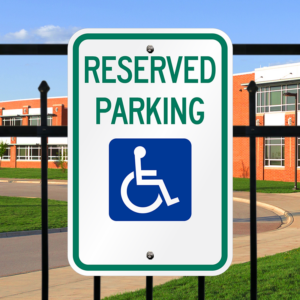
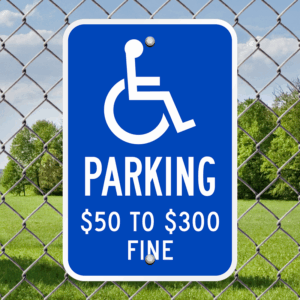
ADA parking signs are federally-mandated markers that identify accessible parking spaces for people with disabilities. You’ve seen them countless times: the blue signs with the white wheelchair symbol mounted on posts throughout parking lots. These signs display the International Symbol of Accessibility (ISA), are mounted at least 60 inches above the ground, and typically include penalty warnings for violations. The height requirement exists so the sign stays visible even when a vehicle is parked in the space.
But ADA parking signs do more than just mark a spot. They establish legal protection for accessible spaces, communicate consequences for misuse, and ensure people who rely on accessible parking can actually find and use it. Without proper signage, an accessible space loses its enforceability, and someone who genuinely needs that space might find it occupied by someone who doesn’t.
Every compliant ADA parking sign includes several key elements:
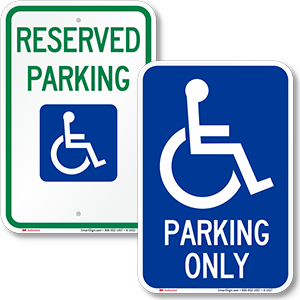
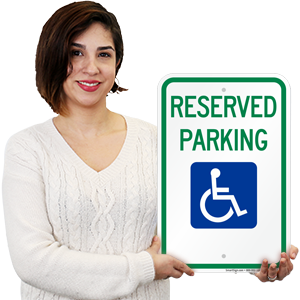
– International Symbol of Accessibility: The white wheelchair figure on a blue background that identifies the space as reserved
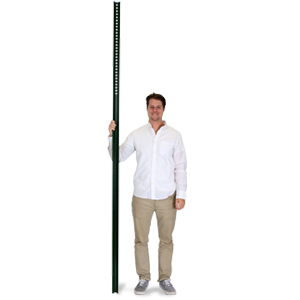
– Mounting height: The bottom edge positioned at least 60 inches from the ground
– Penalty information: State-required fine amounts displayed prominently
– Designation text: Wording like “Reserved Parking” or “Accessible Parking Only”
Federal ADA parking sign requirements
The Americans with Disabilities Act sets baseline requirements that apply to parking facilities across the entire country. Individual states often layer on additional rules, but every facility open to the public has to meet federal minimums first. Think of federal requirements as the foundation, and state requirements build on top.
International Symbol of Accessibility
The ISA is the universal identifier for accessible parking. This symbol (a white stylized wheelchair figure against a blue background) appears on every accessible parking sign worldwide. The standardized design means anyone can recognize it instantly, regardless of what language they speak or where they’re from.
Sign height and mounting specifications
Federal standards require accessible parking signs to be mounted with the bottom edge at least 60 inches (5 feet) above the ground. Why so specific? When a car, truck, or van pulls into the space, a sign mounted any lower gets blocked from view. Someone driving through the lot looking for accessible parking wouldn’t be able to spot it.
Required text and penalty warnings
Most ADA parking signs include “Reserved Parking” or similar text alongside the ISA symbol. Nearly every state also requires displaying the fine amount for illegal parking. Penalties typically range from $250 to $1,000 depending on where you are. The penalty warning works as both a deterrent and official legal notice.
Sign size and reflectivity standards
The ADA itself doesn’t mandate specific sign dimensions, but most jurisdictions follow the Manual on Uniform Traffic Control Devices (MUTCD), which recommends a minimum of 12″ x 18″ for parking lot signs. Reflective materials (either engineer-grade or high-intensity prismatic sheeting) make signs visible at night and in low-light conditions. A sign that can’t be seen after dark isn’t doing its job.
Accessible parking space and aisle standards
Signs mark spaces that have to meet specific physical requirements too. The sign is just one piece of the puzzle. The space itself, the access aisle next to it, and the route to the building all factor into compliance.
Parking space dimensions
Standard accessible parking spaces require a minimum width of 96 inches (8 feet). The surface has to be level, firm, stable, and slip-resistant so wheelchairs and mobility devices can move safely.
– Standard accessible space: Minimum 96 inches wide
– Surface requirements: Level, firm, stable, and slip-resistant
– Slope limitations: Maximum 2% slope in any direction
Access aisle requirements
Access aisles are the striped areas next to accessible spaces. They provide room for wheelchair users to deploy ramps or transfer out of vehicles. Standard accessible spaces require a minimum 60-inch (5-foot) access aisle.
Here’s something people often overlook: the aisle has to connect directly to an accessible route leading to the building entrance. An accessible space in the far corner of a lot with no clear path to the door doesn’t actually meet ADA requirements.
Location and proximity to entrances
Accessible spaces belong on the shortest accessible route to the building entrance. When a facility has multiple parking areas or entrances, accessible spaces get dispersed among them rather than clustered in one spot. The goal is convenient access from wherever someone parks.
Van-accessible parking sign requirements
Van-accessible spaces serve vehicles equipped with wheelchair lifts and ramps. These vehicles require more clearance than standard cars, so van spaces have distinct requirements.
Van-accessible space dimensions
Van-accessible spaces require a wider access aisle (96 inches or 8 feet minimum) to accommodate side-mounted lifts. Vertical clearance matters too: at least 98 inches throughout the entire vehicular route to the space. Raised-roof vans won’t fit under low overhangs or parking structures with insufficient height.
Van-accessible signage specifications
Every van-accessible space requires an additional sign or designation reading “Van Accessible” mounted below the standard accessible parking sign. The ratio works out to at least one van-accessible space for every six accessible spaces in a parking facility. A lot with four accessible spaces, for example, still requires at least one van-accessible space. MyParkingSign offers compliant Van Accessible Parking Signs that meet federal and state requirements.
How to calculate required accessible parking spaces
The number of required accessible spaces depends on total parking capacity. Here’s how the federal minimums break down:
| Total Parking Spaces | Required Accessible Spaces |
| 1-25 | 1 |
| 26-50 | 2 |
| 51-75 | 3 |
| 76-100 | 4 |
| 101-150 | 5 |
| 151-200 | 6 |
| 201-300 | 7 |
| 301-400 | 8 |
| 401-500 | 9 |
| 501-1000 | 2% of total |
| Over 1000 | 20 plus 1 per 100 over 1000 |
One of every six accessible spaces (or fraction thereof) has to be van-accessible. So a lot with 200 spaces requires 6 accessible spaces total, with at least 1 of those being van-accessible.
State-specific handicap parking sign requirements
Federal ADA standards set the floor, not the ceiling. Many states impose additional requirements for sign content, dimensions, or penalty language. When federal and state rules conflict, the stricter standard applies, which usually means following state requirements.
California accessible parking signs
California maintains some of the most detailed accessible parking sign requirements in the country. The state requires specific sign designs (the R99 tow-away warning and R100 series) with exact wording and fine amounts. California signs display penalties up to $1,000 and include tow-away warnings where applicable. Using a generic sign that doesn’t match California’s specifications can result in compliance issues. MyParkingSign provides California-specific handicap parking signs that meet all state requirements.
Texas accessible parking signs
Texas requires the ISA symbol along with specific penalty language indicating fines up to $1,250 for first offenses. Signs also include the state’s required “Reserved Parking” text and reference applicable state statutes. You can find compliant Texas handicap parking signs with the correct penalty amounts and statutory references.
Florida accessible parking signs
Florida mandates that accessible parking signs display fines of $250 to $500 and include specific wording about permit requirements. Florida also requires signs to be mounted on posts. Painted markings on the pavement alone don’t satisfy the requirement. MyParkingSign offers Florida-compliant handicap parking signs with proper penalty language and mounting options.
Tip: Penalty amounts and required text change periodically through legislation. When ordering ADA parking signs, verify your state’s current requirements rather than relying on what was accurate a few years ago.
ADA parking sign compliance and penalties
Non-compliance with ADA parking sign requirements carries real consequences for property owners. Individuals can file complaints with the Department of Justice, initiate civil lawsuits, or both. Remediation costs (sign replacement, space restriping, and potential damages) often far exceed what proper compliance would have cost upfront.
Common compliance issues include:
– Missing or damaged signs: Faded, illegible, or absent signs fail to meet requirements
– Incorrect mounting height: Signs positioned below 60 inches
– Missing van-accessible designation: Failure to properly identify van spaces
– Inadequate number of spaces: Not providing enough accessible spaces for lot size
People who illegally park in accessible spaces face state-imposed fines (typically $250 to $1,000) and potential towing at their own expense.
How to select ADA compliant parking signs for your facility
Choosing the right accessible parking signs involves balancing durability, compliance, and visibility. The wrong sign can leave a facility exposed to complaints and costly fixes down the road.
Consider these factors when selecting signs:
– Material durability: Heavy-gauge aluminum (0.063″ or thicker) withstands outdoor conditions for years
– Reflective sheeting: Engineer-grade or high-intensity prismatic materials ensure nighttime visibility
– State compliance: Pre-printed signs with your state’s required text and current penalty amounts
– Mounting hardware: Rust-resistant posts and brackets rated for your climate
MyParkingSign offers state-specific ADA parking signs with compliant text, durable aluminum construction, and reflective sheeting. Browse our complete selection of handicap parking signs or explore ADA compliant signs for your facility. For unique requirements, you can also design and order custom safety signs online.
FAQs about ADA parking signs
1. What is the difference between handicap and accessible parking signs?
A. The terms are functionally interchangeable, though “accessible” is the preferred terminology under the ADA. The shift reflects person-first language that emphasizes the accommodation rather than the disability. You’ll still see “handicap” on many older signs and in everyday conversation. Both refer to the same type of parking space.
2. Can businesses reserve accessible parking spaces for specific individuals?
A. No. ADA-designated accessible spaces remain available to any person with a valid disability parking permit. Assigning spaces to specific employees or customers (even those with disabilities) violates ADA requirements. The spaces are for anyone who qualifies, not designated individuals.
3. How often should ADA parking signs be inspected or replaced?
A. Annual inspection helps identify fading, damage, or illegibility before compliance becomes an issue. Signs exposed to harsh weather or direct sunlight may require more frequent replacement. A good rule of thumb: if you can’t easily read the sign from a parked vehicle’s distance, it’s time for a new one.
4. Do private parking lots have the same ADA requirements as public lots?
A. Yes. The ADA applies to places of public accommodation, which includes private businesses, shopping centers, medical offices, restaurants, and any facility open to the public. The only exemptions are strictly private facilities not open to the public, like certain private clubs or religious organizations in specific circumstances.
5. What materials are most durable for outdoor ADA parking signs?
A. Heavy-gauge aluminum with high-intensity prismatic reflective sheeting and UV-resistant inks provides the longest service life. Quality signs in moderate climates typically last 7-10 years without significant fading. Coastal areas or locations with extreme weather may require more frequent replacement due to salt air or temperature swings.
Related Posts
 NYC Citi Bike pedaling through an uphill battle
 Distracted Driving Month: Putting Texting in a Safer Context
 Why Your Parking Lot Stencils Are Fading Fast and How to Prevent It
 Shared autonomous vehicles may cut parking needs by 90% – study
 NYC Expands Traffic Relief Program
 Beware “charge rage” at the workplace EV station
Category: New Products