

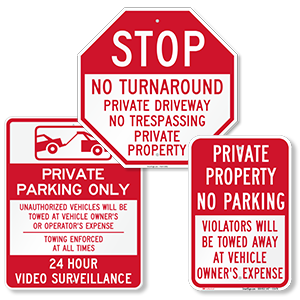

Your Guide to Electric Vehicle Charging Station Signs
The electric vehicle revolution is here. As more drivers switch to EVs, the demand for accessible and well-managed charging stations is skyrocketing. For property managers, business owners, and city planners, this presents a unique opportunity to attract a premium demographic. But with this opportunity comes a challenge: how do you manage your new EV charging spots effectively?
The answer is simple: clear and effective signage.
Just like traditional parking spots, EV charging stations need rules to function smoothly. Without the right signs, you risk confusion, frustration, and underutilization of your valuable charging infrastructure. This is where high-quality electric vehicle charging signs become essential.
Why Every EV Charging Spot Needs a Sign
Proper signage is the key to a successful EV charging program. It’s not just about avoiding chaos; it’s about creating a positive experience for EV drivers and maximizing your investment.
i) Eliminate Confusion: Guide drivers directly to your charging stations with clear wayfinding signs. Once there, specific station signs confirm they’re in the right place.
ii) Prevent Misuse: The most common headache for EV drivers is “ICEing”, when a gasoline-powered car (Internal Combustion Engine) blocks a charging spot. A clear “Electric Car Parking Only While Charging ” sign is your first line of defense.
iii) Improve Efficiency: Use signs to set Custom time limits (e.g., “1 Hour Charging Limit“). This encourages turnover, ensuring more drivers get a chance to charge and reducing queues.
iv) Ensure Safety and Compliance: Many municipalities have specific regulations for EV charging signage, including accessibility requirements. Using compliant signs helps you avoid potential fines and ensures a safe environment.
The Must-Have Types of EV Charging Station Signs
Navigating the world of EV signage can be complex. From federal guidelines to local rules, it’s important to choose the right signs for your location. Here’s a breakdown of the essential types:
1) Wayfinding & Directional Signs
These are the signs that lead drivers from main roads to your charging stations. The Manual on Uniform Traffic Control Devices (MUTCD) provides standards for highway signage, often featuring the universally recognized EV charging symbol to guide drivers at a glance.
2) Station Identification Signs
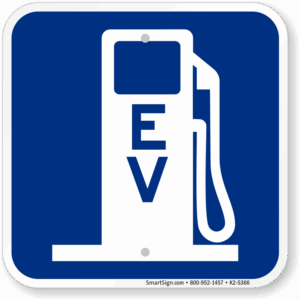
These signs are placed directly at the charging spot. They identify the space as reserved for electric vehicles, often featuring the standard EV charging symbol. This immediately tells drivers what the spot is for.
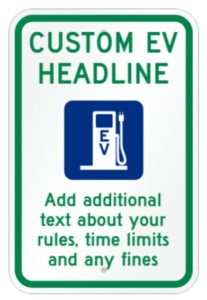
Customizable Electric Vehicle Charging Station Sign
3) Regulatory Signs
These are the workhorses of your EV parking policy. They set the rules for the charging spot and are crucial for enforcement. Common regulatory signs include:
a) EV Charging Only Signs: The most critical sign to prevent non-electric vehicles from parking in the spot.
b) Time Limit Signs: To encourage vehicle turnover.
c) Authorization Signs: For private lots, specifying “Tenant Parking Only” or “Employee Vehicles Only.”
d) Penalty Information: Signs that detail the fines or towing risks for unauthorized parking.
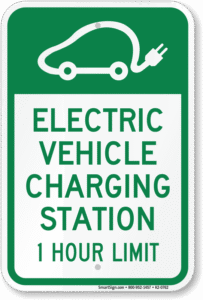
Electric Vehicle Charging Station Hour Limit Sign
4) Pavement Markings
While not a sign, green pavement markings are often used to outline the EV charging stall. These visual cues reinforce the message of the signs, though they are typically not enforceable on their own.
Ready to Organize Your EV Charging Stations?
Don’t let your investment in EV infrastructure go to waste. Implementing a clear and comprehensive signage strategy will ensure your charging stations are used correctly, efficiently, and safely.
At MyParkingSign.com, we offer a complete selection of durable, compliant, and easy-to-read EV Charging Station Signs. From MUTCD-compliant regulatory signs to custom options tailored to your specific needs, we have everything you need to manage your parking spaces effectively.
Browse our full collection of Electric Vehicle Parking Signs today and create a better charging experience for everyone! Find your perfect solution here: https://www.myparkingsign.com/parking-signs/electric-vehicle-parking-signs
Frequently Asked Questions
1. Why is signage so critical for a successful EV charging station program?
A. Proper signage is essential for three main reasons: it eliminates confusion by guiding drivers directly to the stations, it prevents misuse like “ICEing” (gasoline cars blocking the spot), and it improves efficiency by allowing property managers to set and enforce time limits for vehicle turnover.2. What is “ICEing” and how do charging station signs prevent it?
A. “ICEing” (Internal Combustion Engine) is when a non-electric, gasoline-powered car parks in and blocks an EV charging spot. A clear, high-quality “Electric Car Parking Only While Charging” regulatory sign is the first and most critical line of defense against this common headache.3. What are the four essential types of EV charging station signs mentioned in the guide?
A. The four essential types are: Wayfinding & Directional Signs (to guide drivers from the road), Station Identification Signs (placed at the spot to confirm use), Regulatory Signs (to set and enforce rules like time limits), and Pavement Markings (visual cues, though not enforceable on their own).4. How do I ensure my EV charging signs meet legal compliance requirements?
A. Compliance involves using signs that align with federal and local guidelines. Key standards to follow include the Manual on Uniform Traffic Control Devices (MUTCD) for directional signage and ensuring that regulatory signs meet any specific municipal rules, especially those concerning accessibility.5. What is the purpose of using Time Limit Signs at a charging station?
A. The purpose of Time Limit Signs (e.g., “1 Hour Charging Limit”) is to improve charging efficiency by encouraging vehicle turnover. This policy helps reduce queues, ensures more drivers get a chance to charge, and maximizes the utility of the charging infrastructure investment.
Related Posts
 Quebec Minister criticizes relaxation of parking restrictions for Jews during Shavuot
 New York to make parking ticket payment less painful
 Annual traffic fatalities at historic low, but cyclist deaths up
 Parking lot rage: Why so furious?
 How parking garages and lots can LEEP ahead and up their revenue
 What makes a successful Bus Rapid Transit line?
Category: New Products