

Top 5 Essential Parking Signs Every Business Should Have
Your parking lot is the first physical interaction a customer has with your business. Is it a welcoming handshake or a chaotic, frustrating mess? Imagine a potential client circling your lot, unable to find a spot because they’re all taken by employees from the business next door. Or worse, a customer with a disability is forced to leave because the one accessible spot is blocked, and there’s no proper sign to enforce the rule.
An unsigned lot isn’t just an inconvenience; it’s a source of lost revenue and serious legal risk. Without clear guidance, your valuable parking real estate becomes a free-for-all.
The good news is that you can take control. A strategic signage system turns your lot into a well-managed asset that protects your customers, your team, and your bottom line. This guide is for everyone. If you’re a new business owner, we’ll cover the absolute must-haves. If you’re a seasoned property manager, we’ll dive into the compliance details and strategies that optimize your operation.
What You Need to Know: Parking Signs as Customer Service
Before we list the top 5, let’s reframe the purpose of parking signs. They aren’t just about telling people what to do. They are a silent form of customer service and risk management. Clear signs communicate that you are a professional who values safety, accessibility, and, most importantly, your customers’ time.
For a small business owner, this means ensuring your limited spots are available for paying customers. For a facility manager of a large complex, it means creating a safe, efficient flow of traffic and mitigating the significant liability that comes with property ownership. A well-signed lot tells everyone customers, employees, and even potential legal opponents that you are in control of your property. Simple as that.
The Top 5 Essential Parking Signs in Detail
Okay, so here’s where we get into the specifics. Each of these five signs serves a distinct and vital function. We’ll start with the basics and then get into the pro-level details for those who need to get it perfect.
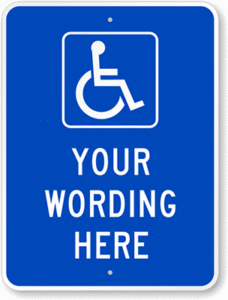
1. The Accessible Parking Sign (ADA Sign)
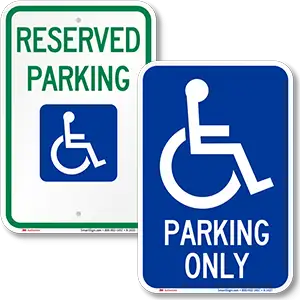
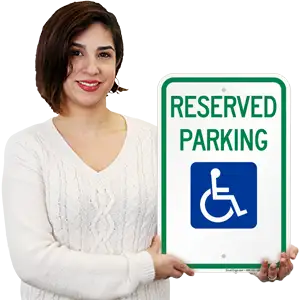
> What it is: This is the iconic blue and white sign with the wheelchair symbol. It reserves spots for individuals with disabilities, as required by the federal Americans with Disabilities Act (ADA).
> Why a beginner needs it: This isn’t optional; it’s the law. Failing to provide properly marked accessible parking can lead to hefty fines, lawsuits, and a reputation for not serving the entire community. It ensures that all customers have safe and fair access to your business.
> Expert-Level Details: Compliance here is extremely specific. An ADA-compliant sign must be mounted so that the bottom edge is at least 60 inches from the ground, ensuring it’s visible to drivers even when another vehicle is parked in the spot. For spaces designed to accommodate wheelchair lifts, you need a “Van Accessible” sign. The most common mistake we see is using cheap, non-compliant signs or installing them at the wrong height. Federal fines for non-compliance can be tens of thousands of dollars, and that’s before any potential civil lawsuits.
 2. The Tow-Away / Unauthorized Parking Sign
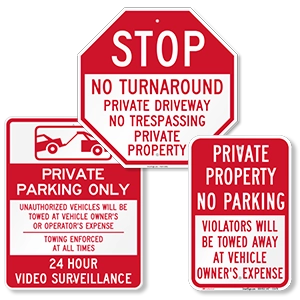
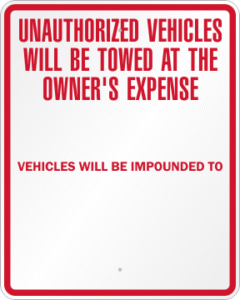
> What it is: This sign gives you the legal authority to remove vehicles that don’t belong in your lot.
> Why a beginner needs it: Without this sign, that car from the neighboring apartment building might as well be a permanent fixture. This is your primary tool for reclaiming your parking spots for the people who actually support your business.
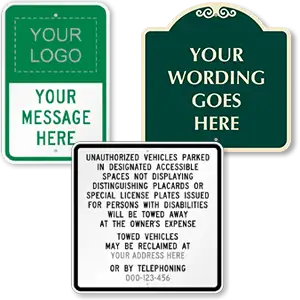
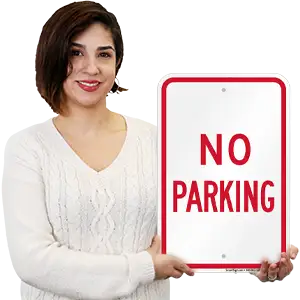
> Expert-Level Details: To be legally enforceable, a tow-away sign must meet your specific municipal codes. This isn’t a one-size-fits-all situation. Most ordinances require very specific wording, such as “At Vehicle Owner’s Expense,” and almost always mandate that you list the name and phone number of the towing company you’ve contracted. Posting a generic “No Parking” sign gives you almost no legal standing to tow a vehicle. A compliant sign is your shield against wrongful towing claims.
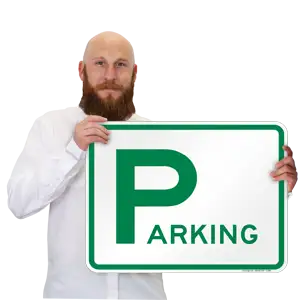
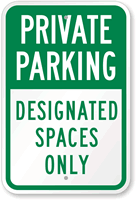
3. The Designated Parking Sign
> What it is: These signs clarify who should park where. Common examples include “Customer Parking,” “Employee Parking,” “Visitor Parking,” or “15-Minute Parking for Pick-Up Orders.”
> Why a beginner needs it: It allows you to reserve your most valuable, convenient spots for your customers. You don’t want your own staff taking up the prime real estate right by the front door.
> Expert-Level Details: This is about optimizing your lot for business velocity. By designating employee parking to a less desirable area of the lot, you increase the turnover rate of your prime customer spots. For retail or food service, signs designating spots for “Online Order Pickup” can dramatically improve customer flow and satisfaction. This isn’t just about orderliness; it’s an ROI calculation that trades a few extra steps for your employees for a much better customer experience.
 4. The Traffic Control & Safety Sign
> What it is: These are your classic Stop signs, Speed Limit signs, and pedestrian crossing warnings.
> Why a beginner needs it: You are responsible for safety on your property. These signs control the flow of traffic, prevent accidents at blind corners, and protect pedestrians walking from their cars to your door.
> Expert-Level Details: While your private lot isn’t a public road, using signs that conform to the Manual on Uniform Traffic Control Devices (MUTCD) is the industry best practice. In the event of an accident on your property, having MUTCD-standard signs demonstrates that you took recognized steps to ensure safety, which can be a critical factor in reducing your liability. A simple Stop sign at a busy intersection in your lot is one of the cheapest insurance policies you can buy.
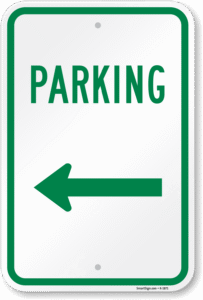
5. The Directional (Wayfinding) Sign
> What it is: These signs guide drivers, telling them where to go. Think “Entrance,” “Exit,” “Additional Parking in Rear,” or “Drive-Thru This Way.”
> Why a beginner needs it: A confused driver is a frustrated driver. Clear directional signs prevent traffic jams, reduce stress, and get customers to your door more efficiently.
> Expert-Level Details: Good wayfinding is a key principle of Crime Prevention Through Environmental Design (CPTED). When a property is easy to navigate, it feels safer and more organized, which can deter criminal activity. For larger or unusually shaped lots, directional signs are essential for preventing drivers from going the wrong way down one-way lanes or getting lost trying to find an exit.
Practical Implementation: Building Your Signage System
1) Map Your Lot: Before you buy anything, sketch a simple map of your parking lot. Mark entrances, exits, pedestrian pathways, and problem areas.
2) Identify Your Needs: Based on your map, decide which of the 5 signs you need and where. How many total spots do you have? This will determine the number of ADA spots you’re required to have.
3) Check Your Local Codes: This is a critical step. Call your local municipal office or police department’s non-emergency line and ask about the requirements for ADA and tow-away signs. Trust me on this one, it will save you a world of trouble.
4) Invest in Quality: Don’t use a homemade sign. To be compliant and durable, signs need to be made from professional-grade materials like heavy-duty aluminum with reflective sheeting. An investment in a quality sign from a trusted provider like MyParkingSign.com will last for years, saving you money and headaches.
Frequently Asked Questions (FAQs)
1. Do I really need all these signs for my tiny 4-spot lot?
A: Even for a small lot, you absolutely must comply with ADA requirements. Having a tow-away notice is also highly recommended to protect your few valuable spots. The other signs, like directional or designated parking, depend on your specific layout and needs.
2. How many accessible parking spots do I need?
A: The number is based on the total spots in your lot. For example, a lot with 1 to 25 spaces is required to have at least 1 accessible spot. The requirements scale up from there. The ADA provides a chart, but always check your local and state codes, as they can be even stricter.
3. Does a Stop sign on my property carry the same legal weight as one on the street?
A: While a police officer may not be able to write a ticket for it, the sign establishes a “duty of care” for the driver. If a driver runs your Stop sign and causes an accident, they would almost certainly be found at fault, which drastically reduces your property’s liability.
4. Will a Tow-Away sign make my business look aggressive or unwelcoming?
A: It’s a common concern, but the opposite is usually true. A clear, professional tow-away sign tells your paying customers that you value their business so much you’re willing to protect their parking spots. It shows you’re maintaining a fair and orderly environment for them. Think of it less as a threat and more as a promise to your customers that a convenient spot will be waiting for them.
5. Can I install these parking signs myself?
A: Absolutely. Installing signs on posts is a straightforward task for most business or property owners. The key things to remember are: 1) Always check for underground utilities like gas, water, or electrical lines before you dig. 2) Use the right hardware for the post and sign to ensure it’s secure against wind and weather. 3) Pay close attention to height requirements, especially for ADA signs, which must be at least 60 inches from the ground to the bottom of the sign to be compliant.
6. How often should I inspect and replace my parking signs?
A: We recommend doing a quick “signage audit” at least once a year. Walk your property and look for signs of fading, graffiti, or physical damage from weather or vehicle impacts. A faded or unreadable sign, especially an ADA or Tow-Away sign, may no longer be legally compliant or enforceable. Investing in high-quality aluminum signs will extend their life significantly, but regular checks are a crucial part of long-term property management and liability protection.
Related Posts
 Study links walkability with higher property values, longer lives, lower crime
 Kentucky Amish Men Imprisoned for Not Displaying Slow Moving Vehicle Signs
 7 tips for effective road safety campaigns
 Vision Zero for cities symposium tackles traffic safety
 Signs vs. stencils: what are the ADA requirements for disabled parking spots?
 Audible Crosswalk Signs in New York
Category: New Products