- Home
- Custom
- No Parking
- Handicap Parking
- Reserved Parking
- Parking Lot
- Private Property
- Posts, Hardware & More
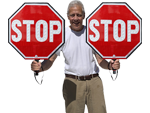
STOP/SLOW paddle is a hand-signaling device designed to promote road safety. The octagonal device is used to signal motorists to stop, proceed, or slow down. When used with the proper hand signals, the STOP/SLOW paddle gives a clear message to motorists because it is easily recognized and understood. You may read more about these devices in this OSHA resource about defensive flagging.
STOP/SLOW paddles are covered in MUTCD Chapter 6E about Flagger Control. Section 6E.03 of this chapter lists the specifics related to STOP/SLOW paddles and requires an octagonal shape on a rigid handle. These paddles shall be at least 18 inches wide with at least 6 inch high letters.The STOP face shall have white letters and a white border on a red background, while the SLOW face shall have black letters and a black border on an orange background. The STOP/SLOW paddles shall be retroreflectorized when used at night. The standard further suggests the use of light semi-rigid material for making these paddles.
Para 04 of Section 6E.03 of the MUTCD The optimum method of displaying a STOP or SLOW message is to place the STOP/SLOW paddle on a rigid staff that is tall enough that when the end of the staff is resting on the ground, the message is high enough to be seen by approaching or stopped traffic.
MUTCD does permit the use of flashing lights on STOP/SLOW paddles but specifies certain conditions for it. These are:
According to the MUTCD guidance under Section 6E.03, the STOP/SLOW paddle should be the primary and preferred hand-signaling device. This is because the STOP/SLOW paddle gives road users more positive guidance than red flags. The use of flags should be limited to emergencies.
In addition to wearing the right clothes and properly using the appropriate flagging control devices such as flags and STOP/SLOW paddles, flaggers can further ensure their safety by being active and alert sans distractions. They should stay off the roadway, out of the way of traffic, and stand on the shoulder instead.
Flaggers should face the traffic and not away from it. This will let them check the path and speed of approaching vehicles. They should have an escape route planned and should leave their post only when they have been relieved.