Reserved Parking Signs: A Comprehensive Guide for Property Managers
Reserved parking signs designate specific spaces for authorized users, whether that’s employees, residents, visitors, or individuals with disabilities. They’re one of the most practical tools property managers have for controlling lot access and preventing parking disputes before they start.
This guide covers the types of reserved parking signs available, ADA and MUTCD compliance requirements, material options, placement best practices, and how to enforce reserved parking on private property.
What Are Reserved Parking Signs
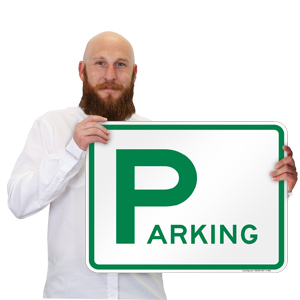
Reserved parking signs are markers that designate specific parking spaces for authorized individuals, vehicles, or purposes. They tell drivers at a glance who can use a particular spot and who cannot. You’ll see them in office parking lots, apartment complexes, hospitals, shopping centers, and just about anywhere parking access matters.
The purpose is straightforward: reserved parking signs communicate restrictions so drivers know where they’re allowed to park. Some signs are generic, simply reading “Reserved Parking Only,” while others get specific with names, titles, or departments. Either way, the goal is the same: making sure designated users always have a space available when they arrive.
For property managers, reserved parking signs are one of the simplest tools for controlling lot access and reducing conflicts between drivers. Without clear signage, you’re likely to deal with complaints, confusion, and unauthorized vehicles taking up spaces meant for tenants, employees, or visitors.
Types of Reserved Parking Signs
Reserved parking signs come in several varieties, and the right choice depends on who you’re reserving spaces for and how specific your messaging needs to be.
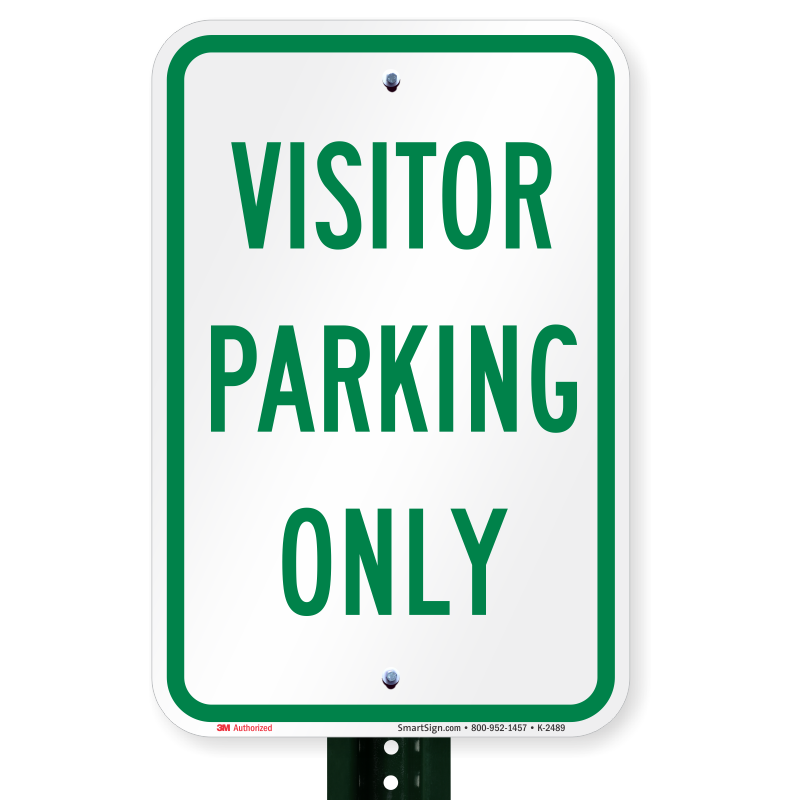
1. Reserved Parking Only Signs
Generic “Reserved Parking Only” signs restrict a space without naming anyone in particular. They’re flexible. Property managers can assign and reassign spaces as needed without ordering new signage each time someone moves or changes roles.
2. Reserved for Specific Individuals or Roles
When you want to make it crystal clear who owns a space, signs that name a person, title, or department do the job. “Reserved for Dr. Smith,” “Reserved for Manager,” or “Reserved for Unit 12” are common examples. Offices, medical facilities, and residential properties often use this approach for assigned parking.
3. Employee and Staff Parking Signs
Employee parking signs separate staff vehicles from visitor or customer parking. They’re common in corporate campuses, retail locations, and healthcare facilities where distinguishing between employee and guest parking helps keep lots organized.
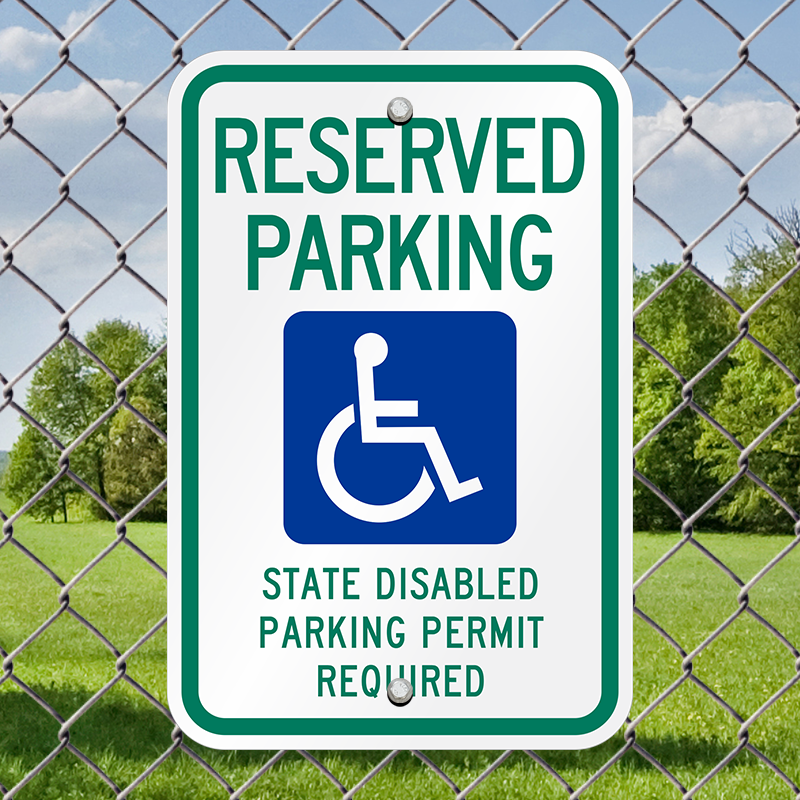
4. Visitor Parking Signs
Visitor-designated signs make it easy for guests to find appropriate parking without wandering through employee or resident areas. Clear visitor signage improves the experience for anyone arriving at your property for the first time.
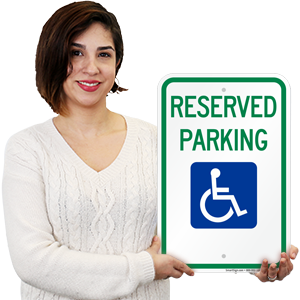
5. Handicap Reserved Parking Signs
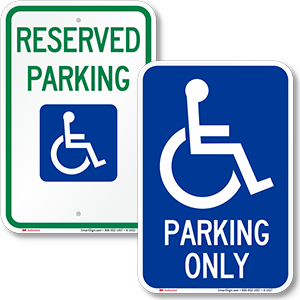
Accessible parking signs are legally required under the Americans with Disabilities Act (ADA). They feature the International Symbol of Accessibility (the familiar blue and white wheelchair icon) and often include penalty language for unauthorized use. ADA signs have specific design and placement requirements, which we’ll cover in more detail below.
6. Reserved Parking Signs with Directional Arrows
Signs with left or right arrows point drivers toward reserved parking in a specific direction. In larger lots or garages, directional signs help reduce confusion and keep traffic flowing smoothly.
ADA Requirements for Reserved Parking Signs
The Americans with Disabilities Act sets legal standards for accessible parking signage, and compliance isn’t optional. ADA-compliant signs help ensure individuals with disabilities have access to designated spaces, and they protect property managers from costly violations.
Accessible Parking Space Ratios
The ADA requires a minimum number of accessible spaces based on total lot capacity. Larger lots need more accessible spaces, and at least one van-accessible space is typically required. Your local code enforcement office can provide the specific ratios for your jurisdiction.
Sign Height and Mounting Standards
ADA signs are mounted high enough to remain visible even when a vehicle is parked in the space. The standard is at least 60 inches from the ground to the bottom of the sign. This height ensures drivers can see the designation before pulling in.
Required Symbols and Language
All ADA parking signs feature the International Symbol of Accessibility. Van-accessible spaces require additional “Van Accessible” language. Many states also require penalty language, such as “Unauthorized Vehicles May Be Towed” or specific fine amounts, though requirements vary by location.
| Sign Type | Required Symbol | Additional Language | Penalty Language |
| Standard Accessible | International Symbol of Accessibility | None required | Varies by state |
| Van Accessible | International Symbol of Accessibility | “Van Accessible” | Varies by state |
MUTCD Standards for Reserved Parking Signage
The Manual on Uniform Traffic Control Devices (MUTCD) is the federal standard for traffic signage in the United States. While MUTCD primarily applies to public roads, many property managers follow these guidelines on private property for consistency and a professional appearance.
MUTCD-compliant signs use specific color schemes, sizing, and reflectivity standards. Reserved parking signs often feature green backgrounds with white text, while regulatory signs like “No Parking” use red and white. Reflective sheeting improves nighttime visibility and is recommended for outdoor installations.
Following MUTCD standards isn’t always legally required on private property. However, drivers recognize and respond to standardized signage more quickly, which can improve compliance and reduce confusion in your lot.
Best Materials for Reserved Parking Signs
The right material depends on where your sign will be installed and how long you expect it to last. Outdoor signs face sun, rain, and temperature swings, while indoor signs in garages or covered areas have different durability needs.
Aluminum Signs
Aluminum is the most popular choice for outdoor parking signs. It resists rust, holds up to weather, and typically lasts for years without fading or warping. Most professional-grade reserved parking signs are made from heavy-gauge aluminum.
Reflective Film Signs
Reflective sheeting, such as engineer-grade or high-intensity films, improves visibility in low-light conditions. Reflective films bounce back headlight beams, making signs easy to read at night. They’re especially useful in parking garages and lots with limited lighting.
Plastic and Corrugated Signs
Lightweight plastic or corrugated signs work well for temporary use or indoor applications. They’re affordable and easy to install, but they won’t hold up as long as aluminum in harsh outdoor environments.
Heavy-Duty Engineer Grade Options
For high-traffic areas or locations with extreme weather, heavy-duty engineer-grade signs offer extra durability. They combine thick aluminum with premium reflective films for maximum lifespan.
How to Customize Reserved Parking Signs
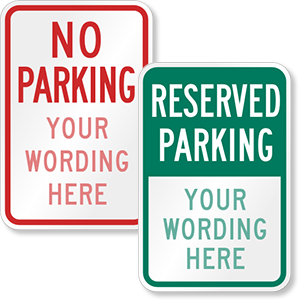
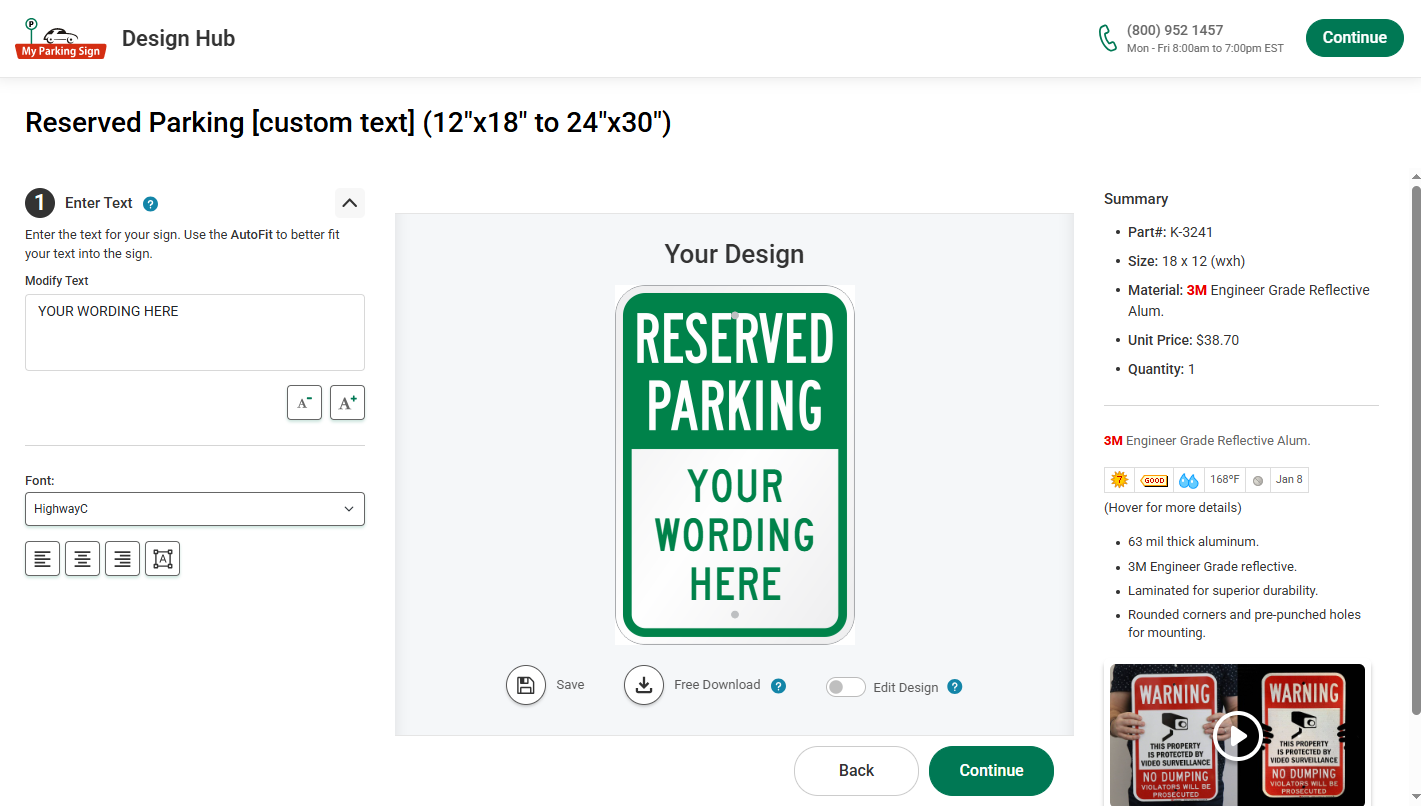
Custom reserved parking signs let you add specific names, logos, or unique messaging that fits your property’s needs. This is especially useful for properties with assigned parking, branded facilities, or unique designations.
Common customization options include:
- Text: Add names, titles, company names, or unit numbers
- Colors: Match your branding or meet regulatory requirements
- Logos: Upload company or property logos for a professional look
- Templates: Choose from pre-designed layouts for faster ordering
Where to Place Reserved Parking Signs
Proper placement ensures your signs are visible, enforceable, and effective. A sign that’s hidden or poorly positioned won’t do its job.
Post-Mounted Signs
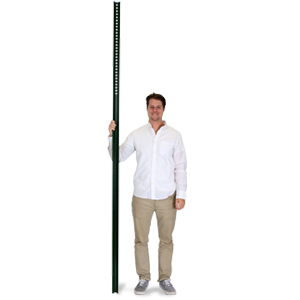
Installing signs on posts at the head of parking spaces is the most common method for outdoor lots. Post-mounted signs remain visible even when a vehicle is parked in the space, which is why this approach is standard for most reserved parking.
Wall-Mounted Signs
In garages or covered parking areas, wall-mounted signs work well. Mount them at eye level or above, facing the driver as they approach the space. This placement keeps signs visible without taking up ground space.
Pavement Markings and Stencils
Ground-level stencils or pavement markers reinforce your signage and improve compliance. Combining vertical signs with pavement markings makes reserved spaces unmistakable, even from a distance.
How to Enforce Reserved Parking on Private Property
Clear signage is the foundation of legal enforcement on private property. Without proper warnings, towing or ticketing unauthorized vehicles can expose you to liability.
Signage Language for Towing Authorization
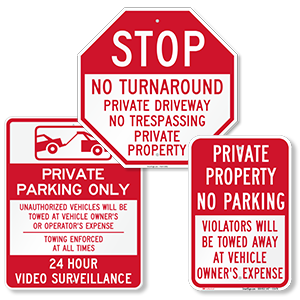
Most jurisdictions require specific language before you can legally tow a vehicle. Common examples include “Unauthorized Vehicles Will Be Towed at Owner’s Expense.” Some states also require you to display the towing company’s name and phone number on the sign. Check your local regulations to confirm what’s required in your area.
Working with Towing Companies
Property managers often contract with local towing companies to handle enforcement. Before authorizing any removals, make sure your signage meets both the towing company’s requirements and local regulations.
Warning Systems and Documentation
Consider using warning notices before towing, especially for first-time offenders. Keeping documentation of violations (photos, dates, and times) protects you if disputes arise later.
How to Choose the Right Reserved Parking Sign
The right sign depends on your property type, intended users, and local regulations. Here’s a quick guide by property type:
Apartment Complexes and Residential Properties
Office Buildings and Corporate Campuses
Healthcare Facilities
Retail and Customer Parking Areas
Order Custom Reserved Parking Signs Online
Finding the right reserved parking sign doesn’t have to be complicated. MyParkingSign.com offers a wide selection of standard and custom options, with durable materials, fast turnaround, and free shipping on qualifying orders. Whether you need a single sign or signage for an entire lot, you can design, preview, and order online in minutes. Design and order custom reserved parking signs online.
FAQs about Reserved Parking Signs
Question 1: Are reserved parking signs legal on private property?
Answer: Private property owners have the legal right to designate reserved parking and enforce restrictions through signage. However, specific towing and penalty rules vary by state and municipality, so it’s worth checking local regulations before taking enforcement action.Question 2: What is the penalty for parking in a reserved space?
Answer: Penalties range from warning notices to towing or fines, depending on property rules and local laws. Some jurisdictions set maximum fine amounts or require specific signage before penalties can be enforced.Question 3: How many reserved parking signs do I need per space?
Answer: Typically, one sign per space (mounted at the head of the space) is sufficient. Adding pavement markings can reinforce the message and improve compliance, especially in busy lots.Question 4: Can I create a custom reserved parking sign?
Answer: Yes, custom signs can be ordered online with specific text, names, or logos to fit any property’s needs. MySafetySign’s design tools make customization quick and easy.Question 5: Who is authorized to park in resident parking areas?
Answer: Resident parking is typically restricted to tenants, registered household members, or guests with temporary permits as defined by property management. Clear signage helps communicate parking rules to all drivers.
Related Posts
 Pasadena uses parking meters to stop panhandling, help the homeless
 How plumbers, the UPS, and people of color benefit from the NYPD’s slowdown
 Parking permits: do’s and don’ts
 Fatal Accident on Bronx River Parkway Destroys Family, Killing Seven Relatives
 Paint job boosts transit efficiency in San Francisco
 Mother’s Day Crash Kills Four Young Mothers
Category: New Products